Choosing the Right Roofing Material for Your Connecticut Home
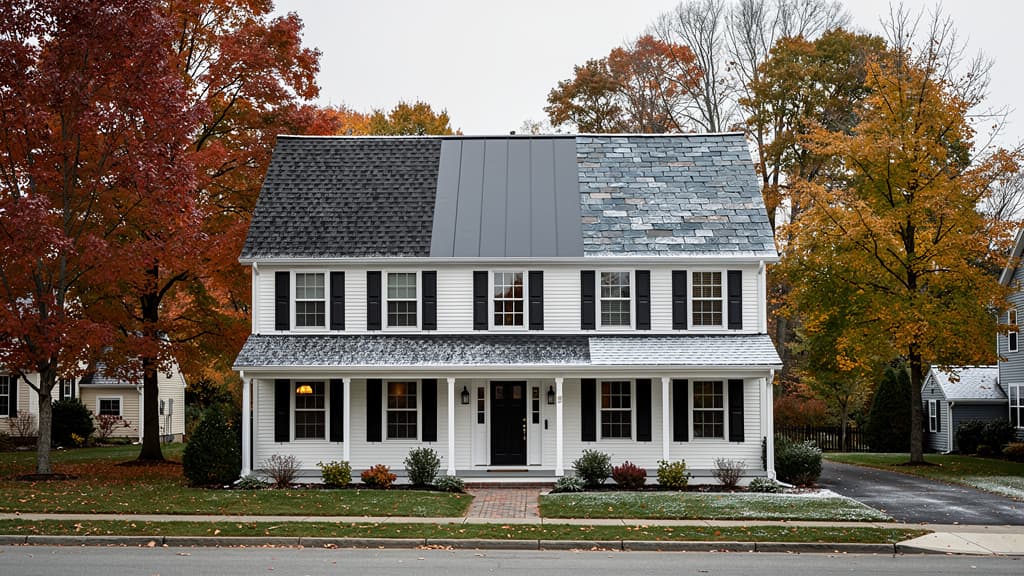
Selecting the right roofing material is one of the most important decisions you'll make as a homeowner. Your roof needs to withstand Connecticut's unique climate challenges—harsh winters, ice dams, heavy snow loads, and seasonal temperature swings—while complementing your home's architecture and fitting your budget.
Let's explore the most popular roofing options for Connecticut homes.
Asphalt Shingles
The most common choice for residential roofing in America.
Asphalt shingles remain the go-to option for many homeowners due to their affordability and versatility. Modern architectural shingles offer improved aesthetics and durability compared to traditional 3-tab designs.
Pros:
- Most affordable upfront cost
- Wide variety of colors and styles
- Easy to install and repair
- Works well with most home styles
- Many options rated for high winds
Cons:
- Shorter lifespan (20-25 years) compared to other materials
- Can be damaged by severe hail and ice
- Susceptible to ice dam damage if not properly ventilated
- Requires regular maintenance in Connecticut's climate
Best For:
Budget-conscious homeowners, traditional home styles, and those who may be selling in the near future.
Metal Roofing
Increasingly popular for its durability and energy efficiency.
Metal roofing has evolved far beyond the barn roof stereotype. Today's options include standing seam panels, metal shingles that mimic traditional materials, and stone-coated steel tiles.
Pros:
- Exceptional longevity (40-70 years)
- Excellent wind resistance (many rated for 140+ mph)
- Reflects solar heat, reducing cooling costs by 10-25%
- Fire resistant and impact resistant
- Low maintenance requirements
- Environmentally friendly (often made from recycled materials)
Cons:
- Higher initial cost than asphalt
- Can be noisy during heavy rain without proper insulation
- Requires specialized installation
- Denting possible from severe hail or debris
Best For:
Homeowners planning to stay long-term, those prioritizing energy efficiency, and properties in high-wind zones.
Slate Roofing
A New England classic offering timeless elegance and exceptional durability.
Slate roofs are a hallmark of Connecticut architecture, particularly in historic homes. Natural slate offers unmatched longevity and beauty.
Pros:
- Exceptional lifespan (75-100+ years)
- Excellent performance in freeze-thaw cycles
- Fire resistant and virtually maintenance-free
- Classic New England aesthetic that increases home value
- Naturally resistant to mold and moisture
Cons:
- Highest weight—requires reinforced roof structure
- Most expensive option
- Individual slates can crack from severe impact
- Requires specialized installers
- Longer installation time
Best For:
Colonial, Victorian, and historic homes; homeowners seeking long-term value and classic New England aesthetics.
Flat Roof Systems (TPO, EPDM, Modified Bitumen)
The practical choice for commercial buildings and modern residential designs.
Flat or low-slope roofs require specialized membrane systems that can handle water pooling and Connecticut's freeze-thaw cycles.
TPO (Thermoplastic Polyolefin):
- Energy efficient (white reflective surface)
- Good puncture and tear resistance
- Weldable seams for waterproofing
- 15-20 year lifespan
EPDM (Rubber Roofing):
- Proven durability over decades
- Easy to install and repair
- Weather resistant
- Cost-effective option
Best For:
Commercial buildings, carports, additions, and modern architectural designs with flat roof elements.
Making Your Decision
When choosing a roofing material, consider these factors:
- Budget: Both initial cost and long-term value
- Home Style: The material should complement your architecture
- Longevity: How long do you plan to stay in the home?
- Climate Performance: Hurricane resistance and energy efficiency
- HOA Requirements: Some communities have restrictions
- Insurance: Certain materials may qualify for discounts
Our Recommendation
For most Connecticut homeowners, we often recommend considering metal roofing or high-quality architectural shingles with ice and water shield protection. Metal roofing excels at shedding snow and ice, while architectural shingles offer excellent value when paired with proper ventilation to prevent ice dams.
However, there's no one-size-fits-all answer. We're happy to evaluate your specific home, discuss your priorities, and provide recommendations tailored to your situation.
Ready to explore your options?
-The American Roofing Team